What the $500 to $1000 Range Actually Buys You
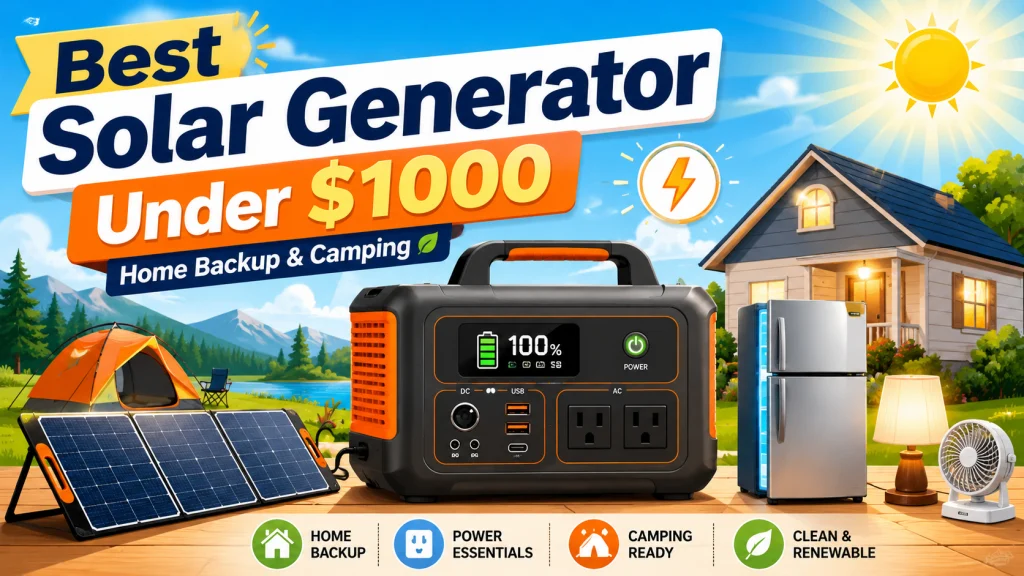
Below $500, you are mostly getting lead-acid or older lithium chemistries, smaller inverters that trip on compressor loads, and charging speeds slow enough that recharging from a wall outlet takes most of a day. The jump to the $500 to $1000 range solves most of those problems at once. LFP battery chemistry becomes standard here, which matters for two reasons: cycle life and thermal stability. A well-maintained LFP battery is rated for 2000 to 3000 charge cycles before dropping to 80 percent capacity. A unit bought today in this tier should still be performing well a decade from now under regular use. That is not a small distinction when you are buying something for emergency preparedness.
Inverter size also steps up meaningfully. Units in this range typically carry a 1000W to 2000W continuous inverter with a 2000W to 3000W surge rating. That surge headroom is the number that determines whether a refrigerator compressor starts cleanly or trips the unit every time. A modern inverter-type compressor in a refrigerator made after 2015 draws 100 to 200W running but surges to 350 to 600W at startup. A 2000W surge-rated inverter handles that comfortably. Units below this tier with 1000W surge ratings often trip on the compressor start, which is the single most common complaint I heard when customers came back after buying something too small.
Solar input capacity also expands in this range. A 400W to 500W maximum solar input on a 1000Wh battery is a reasonable daily recharge ratio. In 5 peak sun hours at 80 percent real-world panel efficiency, a 500W-rated panel setup produces approximately 2000Wh of energy. That covers a full recharge of a 1000Wh unit with margin left over for simultaneous loads. Below this tier, maximum solar input is often capped at 100 to 200W, meaning a full recharge from solar alone takes 8 to 12 hours of good sun. That number is the difference between a unit that can sustain itself during a multi-day outage and one that cannot keep up with its own consumption.
What Confirmed Head-to-Head Testing Shows
Outdoor Life ran a direct comparison between the EcoFlow DELTA 2 and the Anker SOLIX C1000 in May 2025, measuring sustained low-wattage draw, the kind of load that reflects how most people actually use a solar generator during an outage. Not at full rated power running a circular saw, but at 50 to 200W steady draw running a router, a CPAP, phone chargers, and some LED lights across several hours. The result: the EcoFlow DELTA 2 lasted over an hour longer on that sustained low-wattage test than the Anker SOLIX C1000, despite similar rated capacities on paper.
That gap is worth understanding. Rated Wh is a nominal figure measured at a specific discharge rate under lab conditions. Real-world usable capacity depends on the actual discharge curve of the battery chemistry, inverter efficiency at partial load, and BMS behavior during extended low-draw sessions. Units in this tier with the same rated capacity can deliver noticeably different real-world runtimes depending on how efficiently they manage a steady 100 to 150W load over 8 to 12 hours. This is exactly the kind of difference that does not show up in spec sheets but does show up in an overnight fridge test.
The takeaway from that comparison is not that one brand automatically wins every buying decision. It is that rated capacity is the starting point for comparison, not the ending point. If two units sit at similar prices and similar rated Wh, the sustained low-wattage draw test result is a more relevant performance signal for home backup use than peak output watt ratings. For a detailed brand-level breakdown of how the major manufacturers in this tier compare across more metrics, the full Jackery vs EcoFlow vs Bluetti vs Anker comparison covers the full picture by brand.
Field Note: When customers came in asking about the $800 to $1000 range, the most common misread I saw was using peak output watts as the primary comparison point. Two units, both rated 1000W continuous, both $900. The customer assumed they were equivalent. The actual difference that mattered every time was the AC charging speed and the inverter’s real surge handling, not the peak output number. Spec sheets in this tier tend to lead with the number that sounds best. For most home backup buyers, the numbers that predict real outage performance are AC charge time, maximum solar input, and surge watt rating, in that order.

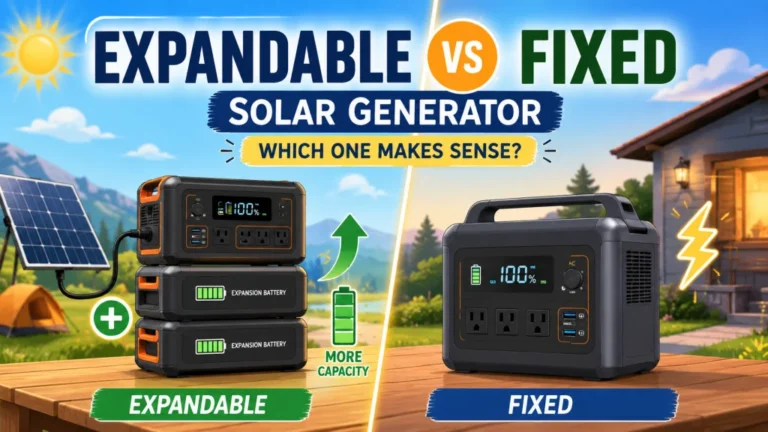
This 1kWh LFP battery station charges from 0 to 80% in just 50 minutes via AC input, and its LiFePO4 chemistry delivers a 3,000 plus cycle lifespan that is roughly 6 times longer than standard lithium batteries. Capacity is expandable up to 3kWh with additional batteries, making it well suited for camping, RVs, or off-grid living. Its 1,800W output powers across 15 outlets, handling around 90% of household appliances, and accepts up to 500W of solar input for clean, fuel-free charging. The package includes a 5-year customer service guarantee.
Check On AmazonIf you click this link and buy, we earn a commission at no additional cost to you.
Fridge Runtime in This Tier
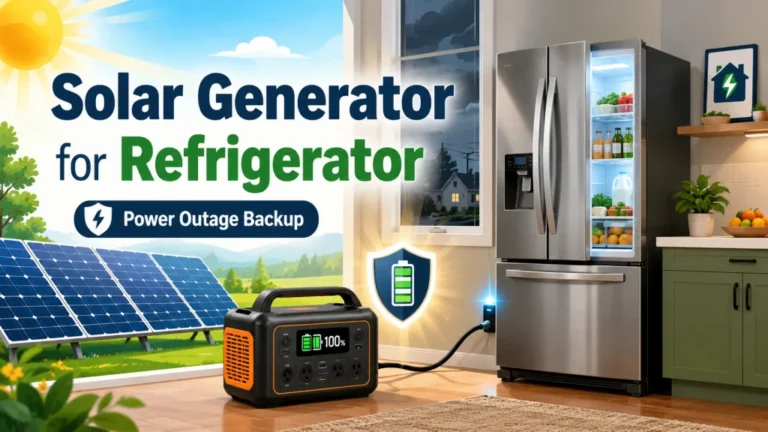
One of the most useful real-world data points in this tier comes from a documented test during the Presidents Day 2025 outage event: a 1000Wh-class unit powered a 25 cubic foot side-by-side refrigerator for 18 hours total across the event period, including solar recharge cycles. Pure battery runtime without recharging was approximately 8 to 9 hours. That result reflects a modern inverter-type compressor refrigerator running at a real average draw of around 100W, which is typical for an energy-efficient unit made after 2015. A 1000Wh battery at 85 percent inverter efficiency delivers approximately 850Wh of usable output. At 100W average draw, that covers about 8.5 hours before hitting the recommended 20 percent reserve. With a solar recharge panel running simultaneously during the day, the 18-hour total becomes achievable.
The generic math is more variable than a single test result suggests. Older refrigerators and larger side-by-side models with single-speed compressors average 140 to 160W or more, which reduces 1000Wh usable capacity to approximately 5 to 6 hours of runtime. A 1000Wh unit is best matched to a modern, energy-efficient refrigerator with a verified low average draw. If your fridge is older or draws closer to 150W average, a 1500Wh unit is the more reliable overnight choice. At 85 percent efficiency, 1500Wh delivers approximately 1275Wh of usable output, covering 8.5 hours at 150W average draw. The bigger gain from a 1500Wh unit in multi-day outage use is not just the extended runtime but the margin it provides for solar recharge to run the fridge simultaneously during the day without draining the overnight reserve.
For a complete treatment of the refrigerator sizing math including the compressor surge detail and how different fridge ages affect average draw, the guide to sizing a solar generator for a refrigerator covers the full calculation.
Charging Speed: The Underrated Spec in This Tier
AC charging speed matters more for home backup than most buyers realize before their first outage. The scenario where it becomes decisive is a short power interruption: a few hours of outage followed by power restoration. If your unit charges in 80 minutes from a wall outlet, you can go from depleted to fully ready for the next outage in the time it takes to finish lunch. If your unit takes 8 hours to charge, you are gambling that the next outage does not start before the recharge finishes.
Units in the $500 to $1000 tier typically charge in 60 to 90 minutes via AC, a significant improvement over lower-tier units that commonly take 6 to 8 hours. Three confirmed charge times in this tier cluster around 80 minutes: the EcoFlow DELTA 2 charges in about 80 minutes via AC, the Jackery Explorer 1000v2 charges in about 1 hour, and the Bluetti EB3A charges in about 81 minutes. The variation within the tier is small. What matters is that any unit in this range recharges between a morning outage and an evening one, which is the scenario that tests the real-world reliability of an outage preparation strategy.
This fast charging also enables a hybrid gas-plus-solar strategy for multi-day outages. Run the solar generator on its battery overnight. Recharge it from an extension cord to a generator running briefly in the morning to produce the AC power the solar generator needs. Pair that with whatever solar panel input you have. This approach stretches a 1000Wh unit across a 3-day outage without requiring a much larger and more expensive unit. The charging speed is what makes the hybrid approach practical instead of theoretical.

Weighing just 23.8 lbs with a foldable handle, this 1,070Wh LFP power station delivers 1,500W of pure sine wave AC output with a 3,000W surge capacity, capable of running AC units, fridges, and electric pots. Its LFP battery sustains over 70% capacity after 4,000 cycles, translating to a lifespan of more than 10 years. Via the Jackery App, you can enable a full charge in as little as one hour, or switch to a whisper-quiet 30 dB overnight mode. Six output ports including two USB-C with 100W PD charging cover nearly any device simultaneously.
Check On AmazonIf you click this link and buy, we earn a commission at no additional cost to you.
The One Quirk Worth Knowing Before You Buy in This Tier
The Anker SOLIX C1000 Gen 2 has one confirmed minor issue worth being aware of: after a complete battery discharge followed by a full solar recharge cycle, the WiFi connectivity can drop and require a manual reset. This was confirmed by multiple users in 2025. For the vast majority of buyers this is a non-issue because an outage scenario does not require WiFi app control, and a reset takes seconds. But if WiFi app monitoring during recharging is a feature you are specifically planning to rely on, this is worth factoring into which unit you choose.
I mention it not to steer away from the unit, which performs well on the metrics that matter most for home backup, but because omitting known quirks in a buying guide is how buyers end up surprised. Every unit in this tier has some tradeoff. The most useful thing a review can do is surface those tradeoffs clearly so the buyer can decide which ones they can live with for their specific situation.
How to Use This Tier for a 3-Day Outage
A 1000 to 1500Wh unit is not a set-it-and-forget-it 3-day outage solution on battery alone. It becomes one when you layer it correctly. The core strategy that works with this tier involves three inputs: the battery capacity, solar panel recharge during the day, and a short generator or grid recharge window if solar is limited by weather. Each input layer adds time to the outage coverage window.
A realistic 3-day outage plan on a 1000Wh unit with 400W of solar panels in reasonable weather looks like this: overnight battery covers an efficient refrigerator for about 8 to 9 hours if the fridge averages close to 100W. Morning solar begins recharging. In 5 peak sun hours at 80 percent efficiency, 400W panels deliver approximately 1600Wh of real-world input, enough to fully recharge the unit and run the fridge simultaneously during the day. Evening draws down the battery again for overnight coverage. Repeat for three days. This works in spring and fall with efficient loads. It gets tighter with an older refrigerator, winter sun, cloudy weather, or heating equipment running on the same unit.
The full strategic framework for a 3-day outage, including how to prioritize loads, what the cloudy-day math looks like, and how to think about recharge redundancy, is in the 3-day power outage solar generator guide. If you are still deciding whether this tier is the right investment relative to what you are protecting, the full value-per-dollar comparison across the entire market is at the best solar generator for the money overview.

Powered by N-Type cells at 25% conversion efficiency, this dual-sided panel captures up to 28% more energy than single-faced panels and weighs just 15.4 lbs for easy transport. A 30 to 60 degree adjustable bracket with a built-in angle guide keeps sunlight hitting at the optimal 90 degrees throughout the day. IP68 waterproofing and ETFE coating ensure long-term durability in harsh conditions, and it pairs seamlessly with EcoFlow power stations via the included MC4 to XT60i cable.
Check On AmazonIf you click this link and buy, we earn a commission at no additional cost to you.
When to Step Down to Under $500 Instead
Not every buyer needs what this tier provides. If your use case is purely device charging, LED lighting, and running a CPAP or small fan during occasional short outages, a well-chosen unit under $500 handles that load adequately. The $500 to $1000 tier earns its price premium specifically for refrigerator backup, sustained multi-hour loads, and dual-use flexibility across home backup and camping. If none of those apply, the step up may not deliver proportional value for your situation.
The under-$500 tier also has legitimately good options that the marketing tends to underserve. The breakdown of what that lower tier actually delivers, where it is a good match for genuine needs, and where it falls short is in the guide to solar generators under $500.

This 1152Wh LiFePO4 station outputs 1800W across 8 outlets and can be boosted to 2700W through the BLUETTI app for demanding appliances. A full AC charge takes just 1 hour at 1440W input, or 2.8 to 3.3 hours with up to 500W of solar. It doubles as a home UPS with a 20-millisecond switchover for emergency backup. Comes with a 5-year warranty and all essential charging cables included.
Check On AmazonIf you click this link and buy, we earn a commission at no additional cost to you.
Final Thoughts: What to Confirm Before You Buy at This Price
The $500 to $1000 tier delivers on the two things most first-time buyers actually need: enough Wh capacity to run a modern, efficient refrigerator overnight on a single charge, and fast enough AC charging to be ready for the next outage within 90 minutes of grid restoration. LFP chemistry at this price point is essentially standard now, which means a unit bought today should remain useful for a decade under typical use. The performance differences within the tier are real but narrower than the spec sheets suggest. The sustained low-wattage draw test result and the AC charging speed are the two specs that predict actual home backup performance better than rated peak output.
Before buying, confirm four things: rated Wh capacity and actual usable capacity with 85 percent efficiency applied, surge watt rating versus your refrigerator’s startup draw, maximum solar input relative to the panel setup you plan to pair with it, and AC charge time. Those four numbers tell you more about real outage performance than any other specs on the page.

This compact plug-in monitor tracks the energy consumption of any AC 115-volt appliance and displays real-time readings of volts, amps, and wattage at 0.2 to 2.0 percent accuracy. Its large LCD screen lets you calculate electricity costs by the day, week, month, or year, making it easy to spot energy-hungry devices and trim your utility bill. It is also compatible with inverters, adding flexibility for off-grid setups.
Check On AmazonIf you click this link and buy, we earn a commission at no additional cost to you.
FAQs
🔋 Is $500 to $1000 enough for a solar generator that handles real home backup?
Yes, for the most common home backup scenario: keeping a modern refrigerator running overnight, charging devices, and running small loads like a router and lighting. Units in this tier with 1000 to 1500Wh and a proper 2000W surge inverter handle those loads reliably. For sustained multi-day heating loads or running an air conditioner, this tier falls short and a higher-capacity unit is necessary.
⚡ What battery chemistry should I expect at this price?
LFP (lithium iron phosphate) is standard in the $500 to $1000 tier from most major manufacturers. LFP offers a significantly longer cycle life, typically 2000 to 3000 cycles to 80 percent capacity, and better thermal stability than older NMC chemistry. This is one of the primary reasons the performance jump from under-$500 to this tier is steep.
🌡️ How long will an $800 solar generator run a refrigerator?
On a pure battery basis, a 1000Wh unit can run an efficient modern refrigerator averaging around 100W for about 8 to 9 hours. If the refrigerator averages closer to 150W, realistic runtime drops to about 5 to 6 hours. A documented real-world test in this tier showed 18 hours total runtime on a 25 cubic foot refrigerator when solar recharging was included during the day. With panels, the effective runtime extends to cover day-plus-night scenarios across multiple outage days.
☀️ How many solar panels do I need to recharge a 1000Wh unit in a day?
In 5 peak sun hours at 80 percent real-world efficiency, you need approximately 250W of rated panel capacity to fully recharge a 1000Wh unit in one day. Two 100W panels, or 200W rated, gets close but may not complete a full recharge in shorter sun days. Two 200W panels, or 400W rated, provides margin and keeps up with the unit while running a light load simultaneously. Always check the unit’s maximum solar input limit before adding panels above that ceiling.
🔌 How fast does a solar generator in this price range charge from a wall outlet?
Most units in the $500 to $1000 tier charge from empty to full via AC in 60 to 90 minutes. This is one of the most significant practical improvements over under-$500 units, which commonly take 6 to 8 hours. Fast AC charging is what makes the hybrid gas-plus-solar recharge strategy practical for multi-day outages in this tier.
📊 What is the most important spec to compare between units in this tier?
For home backup use, check surge watt rating first because it must exceed your refrigerator’s startup draw of 350 to 600W. Then compare AC charge time and maximum solar input capacity. Rated Wh capacity is important, but sustained low-wattage draw efficiency varies between units and is a better predictor of real outage runtime than rated peak output wattage.
💡 Should I spend more and get a 2000Wh unit instead?
If your goal is to run a refrigerator through a multi-day winter outage without reliable solar recharging, or if you want to add a second load like a CPAP, TV, and lighting on top of the fridge, the 2000Wh tier provides meaningfully more headroom. The price jump to 2000Wh typically moves from the $800 to $1000 range up to $1200 to $1500. Whether that step is worth it depends entirely on how long your typical outages run and whether you can recharge from solar on most days between draws.