What a Portable Power Station Actually Is
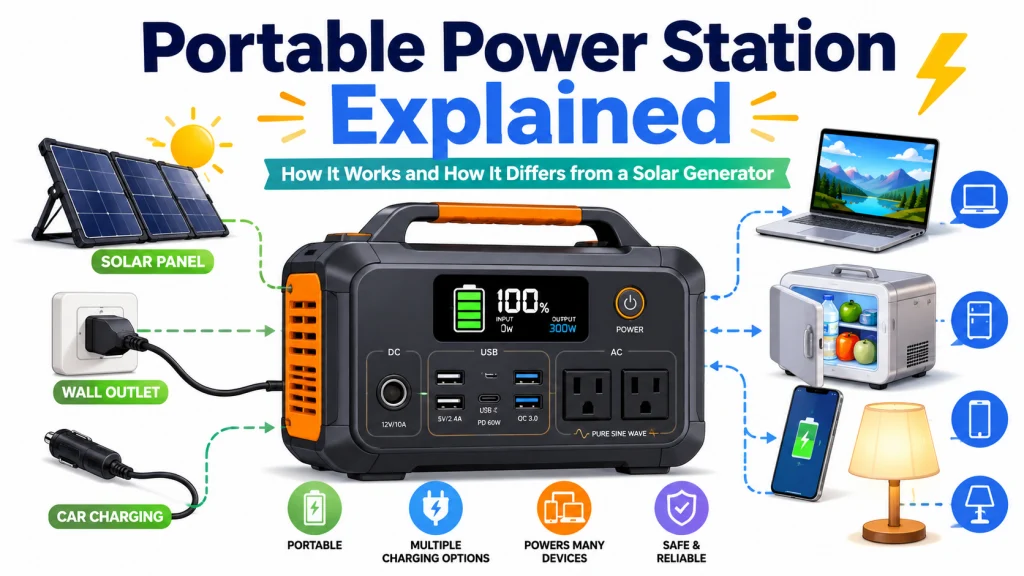
A portable power station is an oversized rechargeable battery in a box with outlets on it. No fuel, no combustion, no engine noise. You charge it from a wall outlet, from solar panels, or from a car’s 12V port, and you plug your devices and appliances into it wherever you need power. That is the complete concept, and almost every question buyers have about these units comes back to understanding that one sentence clearly.
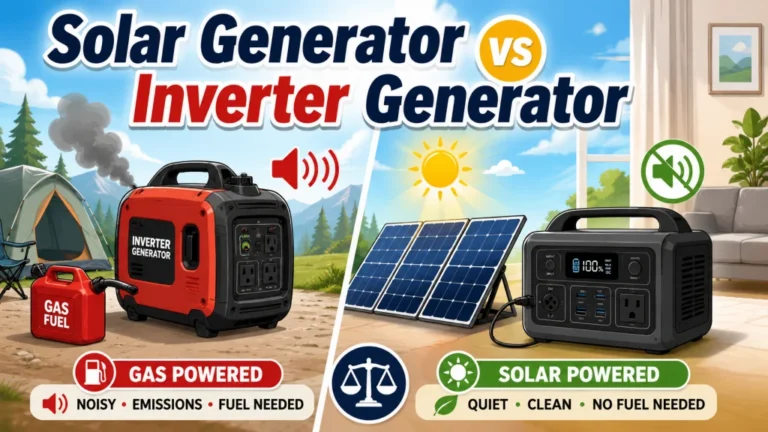
What a portable power station is not is a generator in the traditional sense. In that sense, “station” is the more accurate word. The unit stores and delivers electricity; it does not generate power on the spot. Energy goes in during charging and comes out when you draw from it. If you understand that distinction going in, you will read every spec sheet in this category with significantly more clarity.
Inside the enclosure there are four core components: a lithium battery pack, a battery management system, an inverter, and a set of output ports. The battery stores the electricity. The battery management system monitors cell voltage, temperature, and charge rate to keep the pack stable and protected. The inverter converts stored DC electricity into the 120V AC your home appliances expect. The output ports, typically a mix of AC outlets, USB-A, USB-C, and a 12V DC car-style connector, give you multiple connection options in a single unit.
Everything comes pre-wired and pre-configured. You do not connect components, you do not need to understand electrical systems, and setup amounts to pressing a button. That is a meaningful difference from a DIY battery bank build, which achieves similar results but requires sourcing and wiring separate components. For most buyers, the all-in-one format is the right choice precisely because there is nothing to configure.
What a portable power station cannot do:
- It cannot generate power from thin air. When the battery is empty, it is empty until you recharge it.
- It cannot run any appliance that exceeds its AC output wattage or startup surge rating, regardless of how many watt-hours it holds.
- It cannot recharge quickly from solar panels during poor sun conditions. A small panel on a cloudy day may deliver only 20 to 30 watts of actual input.
- It cannot replace a whole-home backup system. Central air conditioning, electric dryers, and electric ranges typically draw more power than any portable unit can supply.
How It Differs From a Phone Power Bank
The most consistent mistake I saw from first-time buyers was treating a portable power station as a scaled-up phone power bank. The visual comparison is understandable: both are rectangular, both have ports, both recharge via cable. The problem is that the two products operate at fundamentally different voltage levels, and voltage is what determines which appliances will actually run.
A phone power bank outputs low-voltage DC through USB ports: 5V, 9V, 12V, or 20V depending on the charging standard. That handles phones, earbuds, tablets, and some laptops. A portable power station outputs 120V AC from wall-style outlets, identical to the voltage coming out of your home’s circuits. That is the level you need to run a coffee maker, a CPAP machine, a mini refrigerator, or power tools. You cannot get there from a USB port regardless of how large the power bank is.
| Feature | Phone Power Bank | Portable Power Station |
|---|---|---|
| Output type | DC via USB (5V to 20V) | AC wall outlet 120V + USB + 12V DC |
| Typical capacity | 50 to 100Wh (10,000 to 26,800 mAh) | 300Wh to 5,000Wh+ |
| Runs a refrigerator | No | Yes, with sufficient Wh and AC output |
| Runs a CPAP machine | No | Yes |
| Accepts solar panel input | 10 to 25W max on solar models | 100 to 1,400W depending on unit |
| Typical weight | Under 1 lb | 8 lbs to 65 lbs |
The capacity gap matters more than most buyers realize before the first outage test. The largest phone power banks hold around 100 watt-hours. An entry-level portable power station starts around 300 watt-hours. A mid-range unit at 2,000 watt-hours runs a 150-watt average-draw refrigerator for roughly eleven hours, or a 50-watt laptop for about thirty-four hours. That is not a bigger version of the same product. It is a different category of device serving a different set of needs.
Field Note: One of the patterns I watched repeat at the shop was buyers confusing storage capacity with output compatibility. A 20,000 mAh power bank sounds like a lot. At roughly 74 watt-hours, it charges a phone several times and runs a laptop for an hour or so. It cannot power anything that requires a standard wall outlet because it never produces 120V AC. That distinction needs to be clear before anyone sets expectations for outage backup use.

Weighing just 23.8 lbs with a foldable handle, this 1,070Wh LFP power station delivers 1,500W of pure sine wave AC output with a 3,000W surge capacity, capable of running AC units, fridges, and electric pots. Its LFP battery sustains over 70% capacity after 4,000 cycles, translating to a lifespan of more than 10 years. Via the Jackery App, you can enable a full charge in as little as one hour, or switch to a whisper-quiet 30 dB overnight mode. Six output ports including two USB-C with 100W PD charging cover nearly any device simultaneously.
Check On AmazonIf you click this link and buy, we earn a commission at no additional cost to you.
The Three Ways a Portable Power Station Recharges
Most units in this category accept three charging inputs. The speeds are not equal, and knowing the profile of each input shapes how you will actually use the unit in practice.
- AC wall outlet: The fastest option by a significant margin. Plugging directly into a standard household outlet fills most units in 2 to 8 hours depending on capacity and the unit’s maximum AC input rate. This is the method to use before a storm when you know grid power is about to go out. It is also the most reliable way to top off quickly when wall power is available.
- 12V accessory outlet: Uses the standard accessory outlet in your vehicle. Input is slow, typically 80 to 120 watts, which means a 500Wh unit takes 5 to 7 hours from empty via this port. It works as a road trip option or a slow top-off during a long drive, not as a primary charging method when you need a full charge quickly.
- Solar panels: The slowest option per watt delivered, but the only renewable one. A 200-watt panel in direct sunlight delivers roughly 150 to 170 watts of actual input on a clear day. Under heavy overcast, that same panel may deliver 20 to 50 watts. Charging from solar requires time and favorable sun conditions, but it is the only input that works indefinitely without grid access or fuel cost.
For most owners, the practical approach is to charge from the wall whenever grid power is available, use solar to maintain charge during extended off-grid stays, and treat the 12V accessory outlet as a slow supplemental option on the road. Most units accept all three inputs without issue, and some allow simultaneous input from two sources at once, which speeds up charging when that matters.
The Solar Generator Name: Same Product, Different Label
This is where the terminology stops being helpful and starts causing real purchasing confusion. And it happens at every price point in this category.
In most cases, a portable power station and a solar generator are the same physical product sold under different names, often by the same manufacturer on the same product page. The battery chemistry is identical. The inverter is identical. The output specs are identical. The difference is almost always whether solar panels are bundled into the purchase, and whether the marketing team chose to lead with solar generator or portable power station for a given listing.
When a manufacturer bundles a portable power station with one or more solar panels, the combined package gets labeled a solar generator kit. The station itself has not changed. You are buying the same unit with panels added. Alternatively, that same unit gets sold without panels and described as a portable power station, optimized for the buyers searching that term instead. The hardware inside the box is the same either way.
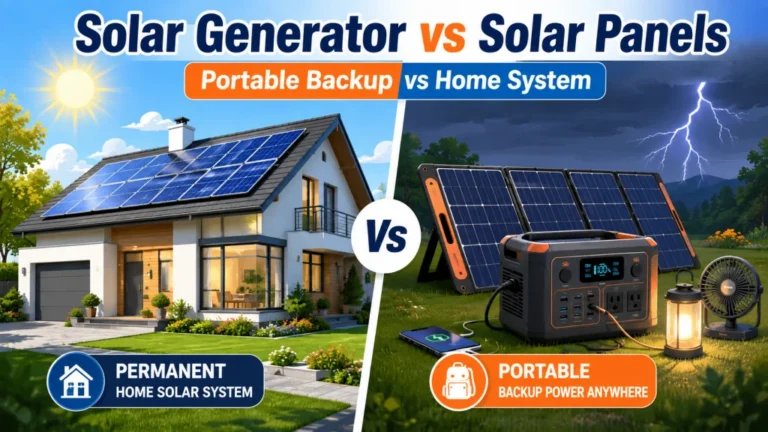
I have covered the full breakdown of where this naming difference actually affects what you pay for, and where it is pure marketing, in the comparison between solar generators and portable power stations. The short version for this article: when you see solar generator on a label, you are looking at a battery-based power station. The word solar refers to the charging capability of the unit, not what is physically included in the shipment.

Powered by IBC bifacial cells at up to 26.7% conversion efficiency, this panel outperforms conventional PERC panels and maintains strong output in low-light conditions. Six panels together can fully charge a 2,042Wh power station in just 2.5 hours, and 10-second setup with an ergonomic handle makes deployment effortless. IP68 waterproofing and an operating range of -4 to 149 degrees Fahrenheit ensure year-round reliability across all weather conditions.
Check On AmazonIf you click this link and buy, we earn a commission at no additional cost to you.
When “Solar Generator” Means No Solar Panels Are Included
This catches buyers off guard more often than it should, and the listing language does not always make it obvious until after the purchase.
Many products sold under the solar generator label include no solar panels. The unit is described as solar-compatible, meaning it has a solar input port and accepts panel charging. The solar generator name refers to the product’s capability, not the contents of the box. If you order one of these expecting panels to arrive and they are not there, panels are a separate purchase you will need to make before solar charging is even an option.
Before buying anything labeled solar generator, check the included items section of the product listing carefully. If panels are part of the package, they will be listed with their wattage. If the listing mentions solar compatibility or maximum solar input but does not list panels in the box contents, you are buying the station alone. The difference between a unit bundled with a 200-watt panel versus the station by itself can represent $150 to $400 in follow-on cost depending on panel quality and what you would need to buy separately.
Note: The watt-hour number on the unit’s label is the battery capacity. If bundled panels are rated at 200 watts, you need roughly 10 to 14 hours of good direct sunlight to fill a 2,000Wh battery from empty under real-world conditions. These two specs do not always appear side by side on the same part of a product page, which is why buyers sometimes underestimate how long solar charging actually takes.

This 1kWh LFP battery station charges from 0 to 80% in just 50 minutes via AC input, and its LiFePO4 chemistry delivers a 3,000 plus cycle lifespan that is roughly 6 times longer than standard lithium batteries. Capacity is expandable up to 3kWh with additional batteries, making it well suited for camping, RVs, or off-grid living. Its 1,800W output powers across 15 outlets, handling around 90% of household appliances, and accepts up to 500W of solar input for clean, fuel-free charging. The package includes a 5-year customer service guarantee.
Check On AmazonIf you click this link and buy, we earn a commission at no additional cost to you.
Final Thoughts: The Three Numbers That Actually Matter
A portable power station is not a complicated device once the core concept is clear. Battery stores energy, inverter converts it to AC, outlets deliver it wherever you need it. You charge when power is available and draw from storage when it is not.
What actually matters when evaluating any unit in this category, regardless of what name appears on the box, comes down to three numbers: watt-hours of stored capacity, AC output watts, and maximum solar input wattage. Those three specs tell you what the unit can power, how long it will run, and how fast it recharges from panels. The name on the label tells you almost nothing. The specs do.
If you are still building your understanding of portable power from the ground up, the complete solar generator guide covers the full landscape, from how these units work to how to size them for your specific use case. That is where most buyers benefit from starting before comparing models or committing to a capacity tier.

This compact plug-in monitor tracks the energy consumption of any AC 115-volt appliance and displays real-time readings of volts, amps, and wattage at 0.2 to 2.0 percent accuracy. Its large LCD screen lets you calculate electricity costs by the day, week, month, or year, making it easy to spot energy-hungry devices and trim your utility bill. It is also compatible with inverters, adding flexibility for off-grid setups.
Check On AmazonIf you click this link and buy, we earn a commission at no additional cost to you.
FAQs
🔌 Can a portable power station run a refrigerator?
Yes, if the unit has enough watt-hours and the AC output rating exceeds the refrigerator’s startup surge. A standard household fridge draws 100 to 200 watts continuously but needs a brief surge of 400 to 800 watts when the compressor starts. A 2,000Wh unit with a 2,000W inverter handles a typical fridge for 8 to 11 hours. A 500Wh unit with a 500W inverter may fail to start some refrigerator compressors unless its surge rating is high enough to clear that initial spike.
⚡ How long does a portable power station take to charge?
Via wall outlet, typically 2 to 8 hours depending on capacity and the unit’s maximum AC input rate. Via car port, expect 5 to 12 hours for a mid-range unit. Via solar panels, it varies widely based on panel wattage and sun conditions, from 4 hours with a large panel array in direct sun to 20-plus hours on a heavy overcast day with a single small panel. Wall outlet charging is always the fastest option when grid power is available.
🏠 Is it safe to use a portable power station indoors during a power outage?
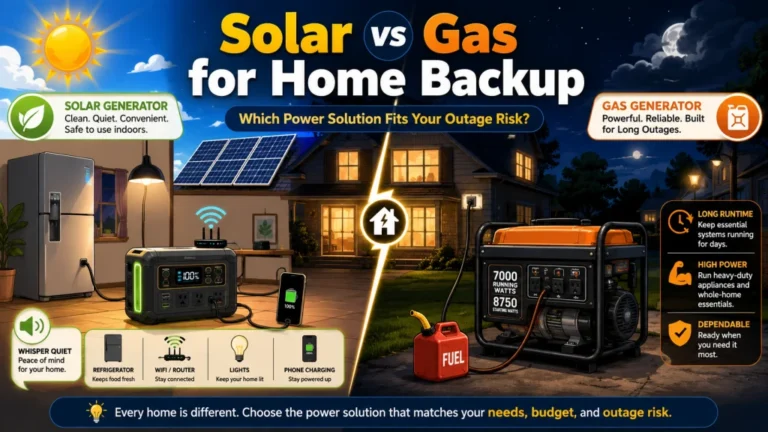
Yes. Portable power stations produce no combustion, no exhaust, and no carbon monoxide. They are safe to operate in a home, bedroom, or apartment during an outage. The only indoor consideration is some heat from the internal fan when charging at high rates, which adequate ventilation handles easily. Gas generators cannot be safely operated indoors under any circumstances, which is one of the primary reasons buyers switch.
🔋 Is a portable power station the same as a battery bank?
In casual usage, yes. A portable power station is essentially a battery bank with an integrated inverter and AC outlets built in. The term battery bank appears more often in DIY solar contexts to describe a set of lithium cells assembled without an integrated inverter. The critical distinction is that a portable power station includes the inverter, making it immediately usable with standard appliances. A raw battery bank without a separate inverter outputs DC power only.
🔄 Can I use a portable power station while it is charging?
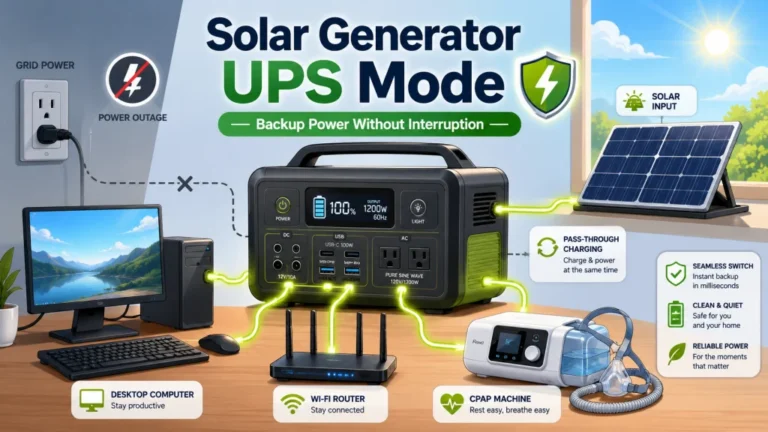
Most units support pass-through charging, meaning you can power devices from the AC outlets while the battery simultaneously charges from a wall outlet or solar panels. Some units reduce total output in pass-through mode to manage battery heat under sustained load. If you plan to run high-draw appliances while charging, check the product specifications for pass-through limitations before assuming full output is available in both directions at once.