Same Word, Completely Different Products
Search for solar generator vs solar panels and you will find reviews, forum threads, and brand comparisons that use the terms interchangeably or define them however the seller finds convenient. The marketing vocabulary is genuinely messy. But the products themselves are not complicated once you understand what each one physically is. In my experience at the counter, the confusion resolved itself in about two minutes once a buyer understood what they were actually looking at.
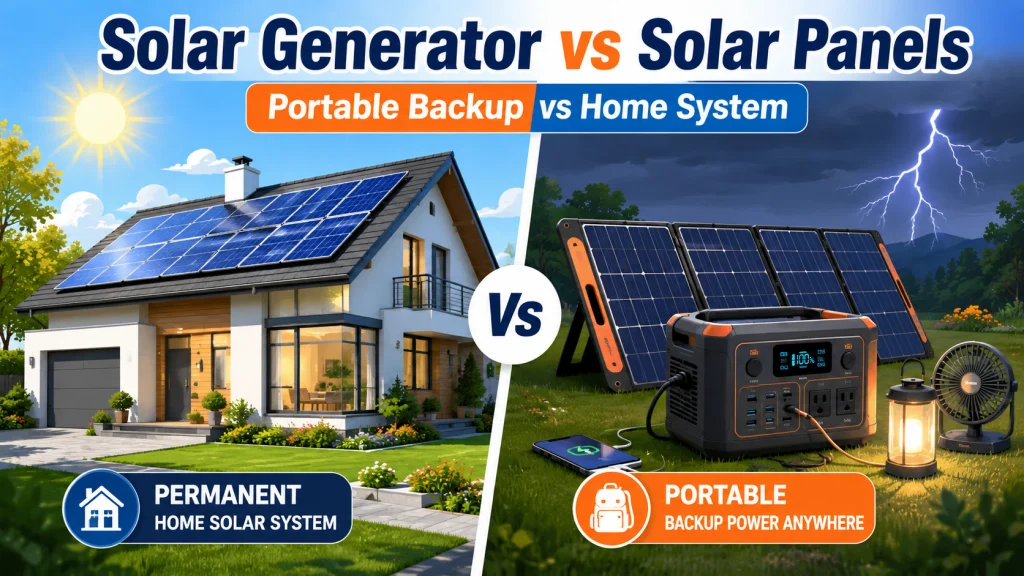
Rooftop solar is a permanent installation. A licensed contractor mounts photovoltaic panels on your roof, runs conduit into your home, and connects the system to a device on your garage or utility room wall called a solar inverter. That inverter converts DC electricity from the panels into AC electricity your home circuits can use. In most grid-tied home solar systems, excess power flows back through your utility meter and earns a credit under net metering rules. The whole installation takes days, requires permits in most states, and costs $15,000 to $30,000 before federal and state tax incentives. It is infrastructure, built into your home the same way a water heater or HVAC system is.
The solar inverter deserves a direct mention because buyers sometimes confuse the term with solar generator. They are not the same thing. The solar inverter in a rooftop installation is a hardwired box, not portable, not sold as a retail product you take home in a box, and it does not power devices independently. It is one component of a permanently installed system. If you are searching for information on that type of inverter, this site is not the right place.
What a Solar Generator Actually Is
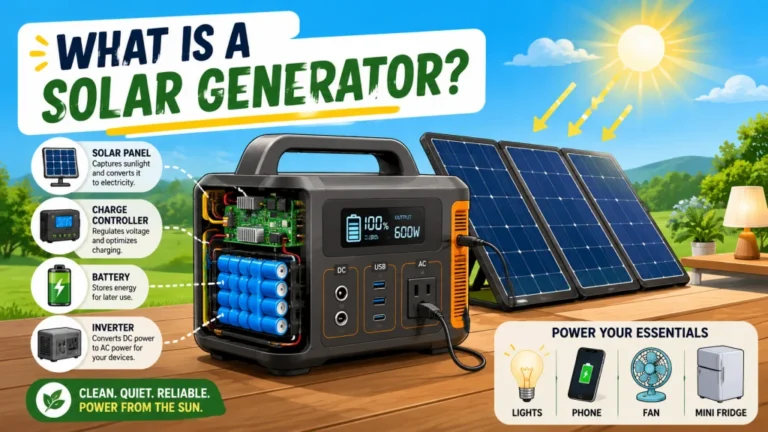
A solar generator is a portable battery system. Inside one enclosure you get a battery, a charge controller, and an inverter. You charge it from a wall outlet, from portable solar panels you set out in your yard or on a table, or from a car’s 12V port. When you need power, you plug devices directly into the built-in AC outlets, USB ports, and DC outputs on the unit. No installer, no permit, no contractor. It arrives in a box and runs the same day you open it.
Entry-level units hold around 300Wh and sit on a desk. That is enough to run a CPAP machine through the night or keep phones and a laptop charged through a short outage. Mid-range units at 1,000Wh to 2,000Wh can run a small refrigerator for several hours or provide meaningful backup for a home office. Upper-end units reach 3,000Wh to 5,000Wh, roll on wheels, and can carry essential home loads through a multi-day outage when managed carefully. Price range runs roughly $300 to $5,000 depending on capacity.
What a portable solar generator is designed to do is provide electricity where a permanent connection either does not exist or is temporarily unavailable. Camping, RV travel, job sites, and power outages are the core use cases. What it is not designed to do is offset your monthly utility bill. It does not connect to your home wiring. It does not talk to your meter. For a full breakdown of what is actually inside one of these units and how each component does its job, the guide on how solar generators work covers every piece in plain language.

Built with IBC cells at 25% conversion efficiency, this bifacial panel absorbs sunlight from both sides and bends up to 221 degrees to conform to curved surfaces like car roofs and balconies. At just 4.52 lbs it is 56% lighter than rigid panels, and IP68 waterproofing plus IEC TS 63163 certification across 19 international tests ensure reliable output from -40 to 85 degrees Celsius. A 3-meter flat cable enables flexible installation in under 5 minutes.
Check On AmazonIf you click this link and buy, we earn a commission at no additional cost to you.
Why Both Keep Showing Up in the Same Searches
The overlap between solar generators and rooftop solar in search results is not random. Three things make them look like the same category from the outside, and I watched this confusion play out regularly enough that it stopped surprising me.
First, both use solar panels. A solar generator charges from portable panels you position in direct sunlight. A rooftop system uses panels permanently mounted on your roof. The physics are the same. The scale, cost, installation, and purpose are not. Second, both convert sunlight into usable electricity. At the most basic level, sunlight goes in and AC power comes out. That similarity is real, but comparing them on that basis is like saying a cargo ship and a kayak both float on water. Third, the marketing vocabulary does not help. Some retailers describe rooftop solar packages as solar generator systems for the home. Some manufacturers use the word generator loosely to describe any solar-powered product regardless of size or portability. The word generator stuck because it captures what a portable unit functionally does during an outage, even if the label is technically inaccurate.
Field Note: The most consistent confusion I ran into at the shop was buyers who had already been quoted $20,000 or $25,000 for a full rooftop installation and then walked in asking whether the unit on the shelf did the same thing for less. They were not being naive. The category names gave them no reason to think these were fundamentally different products. Once I explained what each one actually was, most of them figured out within a few minutes which one actually matched what they needed. The naming is the entire problem, and the marketing makes it worse on purpose.
The Fact About Rooftop Solar Most Buyers Learn Too Late
This one is worth stating plainly before moving on: a standard rooftop solar system connected to the grid shuts off automatically when your neighborhood loses power. Not because the sun stopped shining. Because of a safety requirement called anti-islanding protection.
When the grid goes down, utility workers are dispatched to work on the lines. If your rooftop system were still feeding power into the grid during that time, it would create a live hazard for those workers. So every grid-tied rooftop system is required to disconnect automatically the moment the grid drops. While your neighbors are waiting for power to return, your rooftop panels are producing nothing your home can use, even on a clear sunny afternoon.
This surprises people who spent $20,000 expecting backup power and then watched their lights go dark in the next storm just like every house on the block. Some rooftop solar installations include a battery backup module that routes stored power to specific home circuits during an outage. These exist and they work, but they are a significant additional cost and are not part of a standard residential installation. Most buyers do not realize this until after installation.
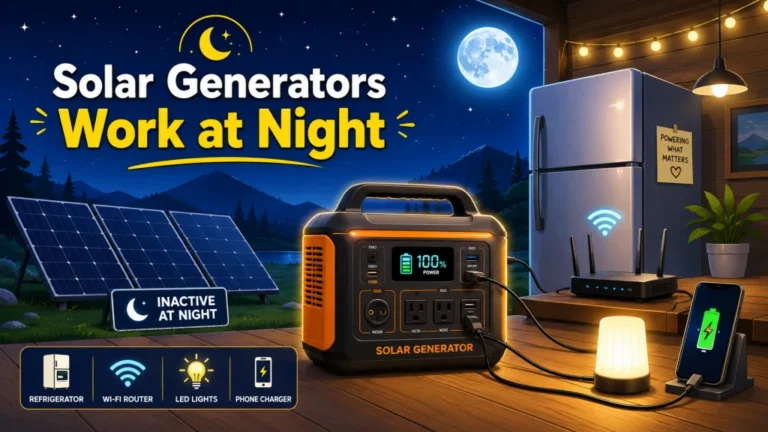
A portable solar generator does not have this problem because it is never tied to the grid in the first place. You charge it in advance and draw from it whenever you need it, regardless of what the grid is doing. That is the specific gap it fills that rooftop solar panels alone do not address. If you are weighing whether a solar generator actually fits your situation, the complete solar generator guide covers all the relevant comparisons, limitations, and use cases in one place.

At 17.2 lbs with 1,600W output across 11 ports, this LFP station handles 80% of common appliances and fully recharges via AC in just 70 minutes using X-Stream technology, or in 3.5 hours with 220W of solar input. The battery is rated for 3,000 plus cycles across nearly 10 years of use, and the package includes a 5-year service guarantee.
Check On AmazonIf you click this link and buy, we earn a commission at no additional cost to you.
What Each One Cannot Do
The most practical way to separate these two products is to look at what each one is genuinely incapable of. Both have real limitations. Neither is a failure for having them. They are just built for different jobs.
Rooftop solar cannot travel with you. It cannot power a campsite, an RV, or a remote job site. It cannot help you anywhere other than your own roof. And without a battery backup add-on, a standard grid-tied installation cannot power your home during a grid outage, even while the sun is shining and the panels are producing. It also requires a licensed contractor, permits, inspections, and several weeks of lead time from signed contract to live system.
A portable solar generator cannot reduce your electricity bill. It does not integrate with your home circuits, does not connect to your utility meter, and does not earn net metering credits. If your primary goal is long-term energy cost reduction for your home, a portable unit is the wrong tool for that problem regardless of how much capacity it has.
| What you want to do | Rooftop solar system | Portable solar generator |
|---|---|---|
| Reduce your monthly electricity bill | Yes | No |
| Power your home during a grid outage | Only with battery backup add-on | Yes, by design |
| Use at a campsite or in an RV | No | Yes |
| Set up without a contractor | No | Yes |
| Start using the same day you buy it | No (weeks to install) | Yes |
| Budget under $5,000 | No | Yes |
If what you need is in the rooftop solar column, this site is not the right resource. If what you need is in the solar generator column, you are in the right place. For most people reading this, the use cases that actually fit a portable unit look something like this:
- Emergency home backup for essential loads during a power outage: fridge, CPAP machine, medical devices, lighting, and phone charging.
- Camping and RV trips where you want to run appliances without a fuel-burning generator nearby or where generators are restricted.
- Remote job sites and outdoor workspaces without grid access.
- Off-grid supplemental power for a cabin, seasonal structure, or backyard setup.
- Households in areas with frequent but short outages where a full rooftop installation is not cost-effective for the problem being solved.
None of those situations require a $20,000 home installation, a contractor, or a permit. That gap in cost, complexity, and portability is what makes the difference between solar generator or solar panels for home use a real decision with a real answer for most buyers.

Weighing just 23.8 lbs with a foldable handle, this 1,070Wh LFP power station delivers 1,500W of pure sine wave AC output with a 3,000W surge capacity, capable of running AC units, fridges, and electric pots. Its LFP battery sustains over 70% capacity after 4,000 cycles, translating to a lifespan of more than 10 years. Via the Jackery App, you can enable a full charge in as little as one hour, or switch to a whisper-quiet 30 dB overnight mode. Six output ports including two USB-C with 100W PD charging cover nearly any device simultaneously.
Check On AmazonIf you click this link and buy, we earn a commission at no additional cost to you.
How to Tell Which One You Need
The decision usually comes down to one question: are you trying to reduce your electricity bill, or are you trying to have power when the grid does not? Those are two different goals and they point to two different products. If you are still working out which side you are on, these five situations map cleanly to one answer or the other.
- Your goal is to lower your monthly utility bill long-term: rooftop solar system.
- Your goal is to have power for essential devices during a blackout: portable solar generator.
- You want both bill reduction and backup when the grid drops: rooftop solar plus a battery backup add-on, which is a separate and significant cost on top of the panels and inverter.
- You want power at a campsite, in an RV, or on a job site away from the grid: portable solar generator.
- You rent your home, or you want to avoid contractors, permits, and a multi-week installation process: portable solar generator.
The battery backup add-on for a rooftop system is worth noting specifically. It does solve the outage problem, but it is still a fixed system tied to your home. It routes stored power to specific circuits during a blackout. It does not travel with you and it does not help you anywhere outside your house. If backup power for essential devices during outages is your only goal and you do not care about reducing the monthly bill, a portable solar generator is often the simpler and significantly cheaper path.
Final Thoughts: Start With the Right Question
Most people who arrive at this question are not researching academic differences. They either just lost power, are planning for the next time they do, or are heading somewhere they know a wall outlet will not be available. For all three of those situations, a solar generator is the right product category and this site is built to help you find and use one correctly.
What I have seen repeat in buyer conversations and at the counter is that the confusion rarely survives a single clear explanation. Once you understand that rooftop panels tie into your home’s electrical system and a solar generator sits in your garage ready to plug into, the question of which one actually fits your situation usually answers itself quickly. If what brought you here is an outage, a campsite, or somewhere without an outlet, you are in the right place.

This 1kWh LFP station delivers 1,800W across 15 outlets, powering 90% of household appliances, and expands up to 3kWh with additional batteries for camping, RV, or home backup use. The included 220W bifacial solar panel captures up to 25% more energy than single-sided panels, and the 3,000 plus cycle battery is rated to last 6 times longer than industry standard. Backed by a 5-year service guarantee.
Check On AmazonIf you click this link and buy, we earn a commission at no additional cost to you.
FAQs
☀️ Can a solar generator replace rooftop solar panels?
No. A solar generator provides portable backup power but does not connect to your home wiring or reduce your electricity bill. Rooftop solar is a permanent home installation designed to offset grid consumption over time. They solve different problems at completely different price points.
🔌 Why does my rooftop solar system not work during a power outage?
All standard grid-tied rooftop solar systems are required to shut off automatically when the grid goes down. This is called anti-islanding protection and it exists to protect utility workers on the lines. Without a battery backup add-on, your rooftop panels cannot power your home during an outage even in full sunlight.
🏕️ Can I use a solar generator for camping?
Yes. Portable solar generators are well suited for camping and RV use. They produce no exhaust, run silently, and can be recharged from portable solar panels during the day. Most campgrounds and parks allow them in situations where fuel-burning generators are prohibited or restricted to certain hours.
💡 Is a portable power station the same thing as a solar generator?
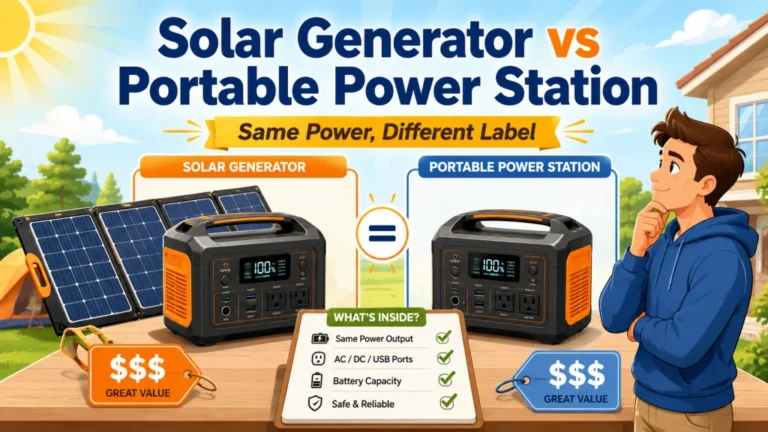
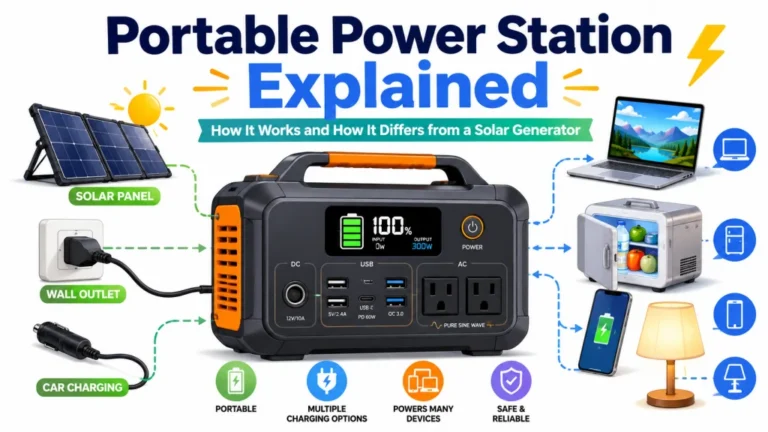
Almost. A portable power station is a battery with a built-in inverter, typically marketed without solar panels included. A solar generator is the same type of unit packaged or marketed with solar panel recharging as a primary feature. In practice the terms are used interchangeably and most portable power stations accept solar panel input regardless of what they are called on the box.
🏠 Can a solar generator power a whole house?
Not typically. A fully loaded home can draw 20,000W to 50,000W at once depending on what is running. Most portable solar generators max out at 3,000W to 7,000W continuous output. They are designed to run essential loads during an outage, not as a full-home replacement for grid power.
⚡ What is a solar inverter and is it the same as a solar generator?
No. A solar inverter is a hardwired component in a rooftop solar system that converts DC electricity from the roof panels into AC electricity for your home circuits. It is not portable and not sold as a standalone consumer product. A solar generator is a self-contained portable unit with its own built-in inverter, battery, and charge controller in one package.