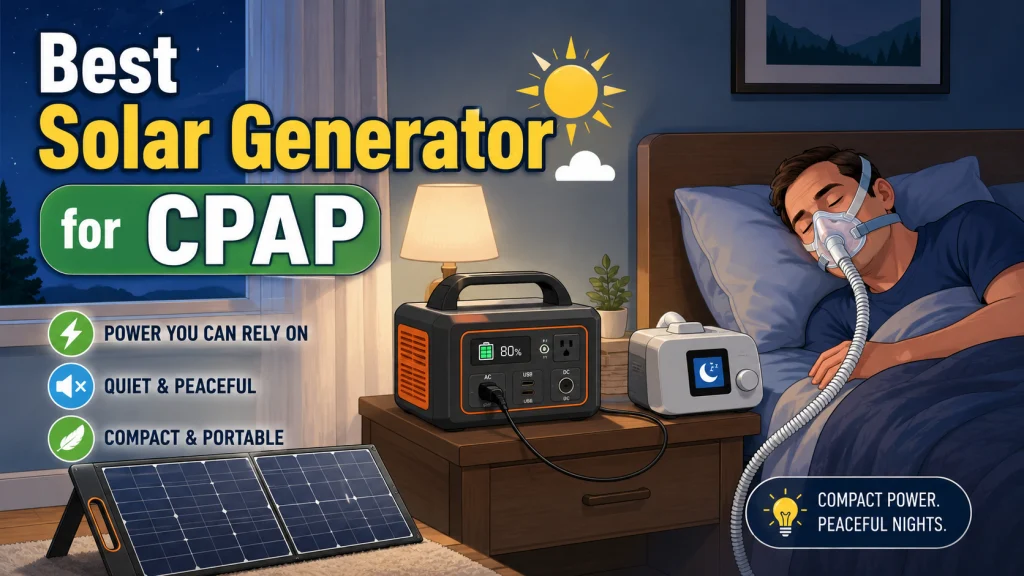
Why CPAP Backup Power Is a Smaller Problem Than Most Buyers Expect
The most common mistake I saw with CPAP buyers was coming in with a number they had read somewhere, usually “I need at least 1,000 watt-hours,” and buying accordingly. That number is almost always more than the job requires. A CPAP machine without a heated humidifier draws somewhere between 15 and 40 watts depending on pressure settings. Even with the humidifier running, most machines land between 30 and 80 watts. For comparison, a standard household refrigerator pulls 100 to 200 watts continuously and surges to 350 to 600 watts every time the compressor kicks on. A CPAP load is small. The unit sized for it can be smaller, lighter, and significantly cheaper than anything sold as a home backup system.
If you are still in the earlier stage of deciding which type of solar generator even applies to your situation, the guide to finding the right solar generator for your use case routes by situation and covers the full landscape. For CPAP users who have already made the solar call and just want to size correctly, the two questions below are where to start.
CPAP Power Draw: The Numbers That Actually Drive the Calculation
The humidifier is the single biggest variable in CPAP power math. Without it, a typical CPAP or APAP machine at moderate pressure draws 20 to 35 watts across an 8-hour night. With the heated humidifier at a standard setting, that climbs to 40 to 70 watts. At maximum humidifier output on a cold night, some machines push toward 80 watts. Pressure setting matters too. Higher pressure means the motor works harder. But the humidifier swing is bigger and more predictable.
Here is what those draw rates translate to in capacity requirements, at 85 percent inverter efficiency and stopping at 20 percent battery reserve to protect long-term cell health:
| Setup | Average Draw | Solar Generator Wh Used in 8 Hours (at 85% AC efficiency) | Minimum Battery Capacity Needed |
|---|---|---|---|
| CPAP, no humidifier | 25W | ~235Wh | 300Wh |
| CPAP, humidifier at mid setting | 50W | ~470Wh | 600Wh |
| CPAP, humidifier at max | 75W | ~705Wh | 900Wh |
These figures assume CPAP is the only device drawing from the unit. If you are also running a bedside lamp or charging a phone overnight, add 20 to 50Wh to your total. Not a deal-breaker for a 500Wh unit, but worth factoring in when sizing something smaller. The numbers above also assume AC power delivery. The DC connection method covered below changes the math in your favor.

Weighing just 3.75 kg with a one-button start, this LiFePO4 station is built for camping and road trips and fully charges in 4 hours via a 100W solar panel. ChargeShield technology extends battery life by 50%, rated for 10 years of use even when charged every 3 days. It carries UL, FCC, and CE certifications across 52 protective mechanisms, and app control via Wi-Fi or Bluetooth keeps you monitored anywhere.
Check On AmazonIf you click this link and buy, we earn a commission at no additional cost to you.
Pure Sine Wave: Why It Matters and Why It Usually Is Not a Problem
CPAP and BiPAP machines require pure sine wave AC to operate correctly. A modified sine wave output, which older or cheaper inverters produce, creates electrical noise that the machine’s motor and control board cannot handle cleanly. Some machines will refuse to start. Others will display fault codes. Prolonged use on modified sine wave output can damage the motor over time. This is not a minor compatibility issue.
The good news: every mainstream solar generator sold today uses a pure sine wave inverter. This was a genuine concern with older portable power packs and with cheap modified sine wave inverters designed for automotive use, but it is not something you need to verify with any current solar generator from an established brand. The only exception worth watching for is if you are considering a very low-cost unit from an obscure manufacturer, or repurposing old power equipment. In those cases, confirm pure sine wave in the spec sheet before connecting your machine. For anything built and sold as a solar generator in the current market, pure sine wave is standard.
The DC Connection Shortcut That Changes the Whole Calculation
This is the part nobody in the marketing materials explains, and it matters more than any capacity number.
Many modern CPAP machines accept a 12V or 24V DC power supply directly, through a separate DC input port on the back or side of the unit. When you power the machine this way, you bypass the solar generator’s inverter entirely. That inverter conversion step, from DC battery power to AC and back to the DC the machine’s internal components actually use, wastes 10 to 15 percent of energy as heat under normal conditions. Skipping it by running DC-to-DC reduces effective draw by 20 to 30 percent. That is a meaningful difference when you are working with a compact unit.
Field Note: The most common CPAP mistake I ran into at the shop was buyers walking out with a 1,000Wh unit when 300Wh would have covered them, sometimes for two nights. They had read that CPAP needs a large battery backup somewhere and bought accordingly. The DC adapter question was the first thing I learned to ask. If their machine supported it, the sizing conversation completely changed. Most of the time they walked out with something half the size and half the price.
The DC bypass works best when the heated humidifier is off. Without the humidifier, a 300Wh unit running DC-to-DC covers a full 8-hour night with a meaningful reserve remaining, and a 500Wh unit covers two full nights. That is where the DC shortcut pays off most clearly.
The complication is that most heated humidifier systems draw from the AC side of the machine and do not benefit from the DC bypass. If the humidifier is running at a standard setting, plan on 40 to 70 watts through AC regardless of whether you use a DC adapter. In practice this means: if you can reduce the humidifier level or turn it off during an outage, your effective Wh requirement drops significantly and the DC adapter does most of the work. If the humidifier needs to run at full heat all night, size by the table above for AC draw and treat the DC adapter as useful for the base CPAP draw, not as a solution for the full combined load. Many users find they sleep without the humidifier acceptably for a night or two, particularly in humid climates or warmer months.
Key point: Check the back panel of your CPAP machine for a DC input port. It looks visually different from the standard AC power jack. Common machines that support DC operation include the ResMed AirSense 10, AirSense 11, and Philips DreamStation series, though the required adapter voltage (12V or 24V) varies by model. Check the manufacturer’s accessory page for your specific model number to confirm compatibility and adapter type. Some solar generator manufacturers also sell CPAP-compatible DC cables sized for their output ports.

This replacement power adapter is compatible with all AirSense 10, AirStart 10, AirCurve 10, and Lumis VPAP series ResMed machines, delivering 24V at 3.75A for 90W of output. It accepts 9 to 32V DC input, making it suitable for 12V cars and 24V trucks, vans, boats, and motorhomes, as well as portable power stations. Backed by a 36-month warranty with 30-day free exchange.
Check On AmazonIf you click this link and buy, we earn a commission at no additional cost to you.
What to Confirm Before You Look at Any Unit
The answers to these questions determine your actual capacity requirement. Getting them before looking at spec sheets saves time and prevents oversizing.
- Does your machine have a DC input port? Check the back or side of the unit for a port that looks different from the standard power jack. If it exists, find out the voltage (12V or 24V) and whether the manufacturer sells a compatible cable. This single answer changes your capacity requirement by 20 to 30 percent.
- Do you use the heated humidifier? If yes, at what setting? If you can reduce or disable it during an outage, your Wh requirement drops significantly. If the humidifier runs through AC at full setting all night, factor in 70 to 80W instead of the lower CPAP-only draw.
- How many nights does your backup scenario cover? A single-night outage is easy to solve at the 300 to 500Wh range. If you are planning for a three-day scenario, recharging strategy matters as much as battery size. The approach for managing power across a multi-day outage is a different planning exercise and worth reading separately.
- What is your average pressure setting? If you use an auto-adjusting machine, look at your therapy data for average recorded pressure rather than the maximum range. Machines typically run well below their ceiling, and average draw is more useful than peak draw for sizing purposes.
- Are other devices sharing the unit? A phone charger and a small LED lamp add 30 to 50Wh to your overnight total. Negligible for a 700Wh unit, but it matters if you are sizing tight around a 300Wh battery.
Once those five answers are in front of you, the math resolves quickly. Here is a simple rule by capacity that applies to most CPAP users:
- 300Wh: one night, no humidifier, DC adapter available.
- 500Wh: one to two nights, no humidifier or low humidifier setting, DC adapter available.
- 700 to 900Wh: one night with heated humidifier running through AC.
- 1,000 to 1,500Wh: two to three nights with humidifier, or any scenario where recharge between nights is uncertain.
Do not start by comparing unit names or prices. Start by confirming your humidifier situation and whether your machine has a DC port. Those two answers narrow the capacity range before anything else matters.
Recharging During an Outage: Options for a Small Unit
The recharge math for a CPAP-only unit is forgiving. A single 100W foldable solar panel in five hours of real outdoor sun produces roughly 70 to 80 usable watt-hours per hour, call it 350 to 400Wh across a decent afternoon. That is more than enough to fully recharge a 300Wh unit and most of a 500Wh unit in one sunny day. If you are in a region with reliable daytime sun during outage season, a single panel is typically sufficient for a small CPAP unit.
The non-solar option is worth keeping in mind. Most solar generators accept DC input from a vehicle’s 12V outlet, typically at 80 to 120 watts, while the engine runs. For a 300 to 500Wh unit, a two-to-three-hour drive or a parked idle session is enough to fully recharge. It is not elegant, but it works during extended outages when daylight hours are limited.
If the outage scenario you are planning for also involves running a refrigerator, sump pump, or other household loads alongside the CPAP, that changes the sizing and recharging conversation entirely. The full breakdown of what a home backup solar generator needs to handle across an outage covers how to think about multiple loads together, including what recharge strategy works for day two and beyond.

Built with A-grade monocrystalline cells at 23% conversion efficiency, this IP65-rated panel handles all weather conditions and includes 10 connector sizes for compatibility with Jackery, EcoFlow, Bluetti, Anker, Goal Zero, and most other major solar generators. An 18W USB-A QC3.0 and 18W USB-C port charge devices directly, and two panels can be run in parallel for faster station charging. The 1,200D Oxford cloth build and foldable handle make it easy to hang, carry, or mount on a car roof.
Check On AmazonIf you click this link and buy, we earn a commission at no additional cost to you.
Final Thoughts: The Right CPAP Unit Is Probably Smaller Than You Have Been Told
The CPAP backup sizing problem is smaller than almost every article on the subject makes it appear. Before looking at any unit, confirm three things in order: whether your machine has a DC input port and what voltage it requires; whether you can reduce or disable the heated humidifier during an outage; and how many nights of backup you actually need. Those three answers set your capacity range. From there, pay more only if you need multiple nights, have a humidifier that must run at full heat, or are sharing the unit with other household loads. Otherwise, a unit sized correctly for CPAP alone is going to be smaller and less expensive than what most buyers walk in expecting to need.
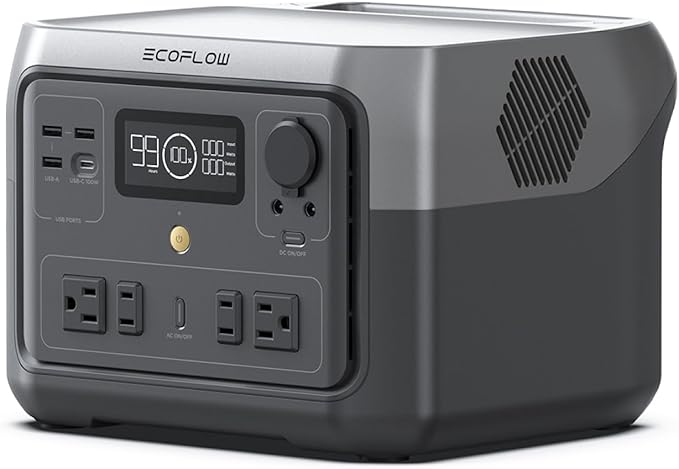
At just 13.3 lbs with 1,000W output across 11 ports, this LiFePO4 station handles everything from AC outlets to USB-C for camping, RV trips, or home backup. X-Stream technology delivers a full AC recharge in just 1 hour, or 2.3 hours with 220W of solar input. The battery is rated for over 10 years of use and ships with a 5-year service guarantee.
Check On AmazonIf you click this link and buy, we earn a commission at no additional cost to you.
FAQs
🌙 Can a solar generator run a CPAP machine all night?
Yes. A CPAP without a heated humidifier draws 15 to 40 watts, meaning a 300Wh unit can run it for a full 8-hour night with reserve remaining. With the humidifier on at a standard setting and running through AC, plan on 600 to 700Wh minimum. A DC adapter reduces power use by 20 to 30 percent mainly when the humidifier is off, since most heated humidifier systems still draw through AC regardless of how the CPAP motor is powered.
🔌 Does a CPAP machine need a pure sine wave inverter?
Yes. CPAP and BiPAP machines require pure sine wave AC output. Modified sine wave output can cause errors, prevent the machine from starting, or damage the motor over time. All mainstream solar generators sold today use pure sine wave inverters, so this is only a concern with older equipment or very low-cost off-brand units.
⚡ What is the DC connection method for CPAP backup power?
Many CPAP machines have a DC input port that accepts 12V or 24V power directly, bypassing the solar generator’s inverter. Running DC-to-DC eliminates the inverter conversion loss and reduces effective draw by 20 to 30 percent. The benefit is largest when the heated humidifier is off, because most humidifier systems still draw through AC even when a DC adapter is in use. Check your machine’s back panel for a DC port separate from the standard AC jack, and verify whether the manufacturer sells a compatible cable.
💡 How many watt-hours do I need for CPAP backup during a power outage?
Without a humidifier and with DC adapter access, 300Wh covers one night and 500Wh covers two. With the humidifier running through AC at a standard setting, plan on 600 to 700Wh per night. For a two to three night outage with humidifier, 1,000 to 1,500Wh gives a real margin without a daily recharge.
🚗 Can I recharge a CPAP solar generator using my car during an outage?
Yes. Most solar generators accept DC input from a 12V car outlet, typically at 80 to 120 watts. A 300Wh CPAP unit recharges in two to three hours of engine running. A 500Wh unit takes three to five hours. It is one of the more practical recharge options when daylight is limited or solar panels are not available.
🌤️ Can I recharge a small CPAP backup unit with just one solar panel?
In most cases, yes. A single 100W panel in five real sun hours produces 350 to 400 usable watt-hours. That fully recharges a 300Wh unit and covers most of a 500Wh unit in a single afternoon. A 200W panel handles the job faster and gives more margin on partially cloudy days.